Lunges are considered a unilateral exercise given the workload required of the lead leg compared to the rear. This allows you to better improve asymmetries in strength, compared with squats, for instance. Also, lunges challenge and improve your balance and stability in unilateral movements. The lunge is a great exercise for runners in that the mechanics are similar to running. The step out to landing is similar to the movements of a running stride, but without the large ground reaction force the body experiences when running.
HOW TO DO
- Start in a standing position with your feet hip-width apart.
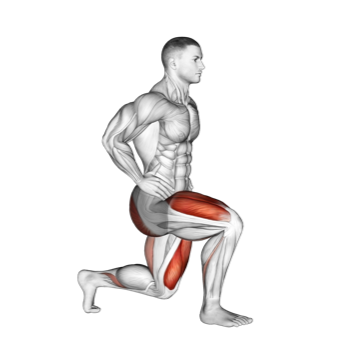
- Step forward longer than a walking stride so one leg is ahead of your torso and the other is behind. Your foot should land flat and remain flat while it’s on the ground. Your rear heel will rise off of the ground.
- Bend your knees to approximately 90 degrees as you lower yourself. Remember to keep your trunk upright and core engaged.
- Then, forcefully push off from your front leg to return to the starting position
TARGET MUSCLES
ADVANTAGES
- Weight loss. Lunges work the large muscle groups in your lower body, which builds leans muscle and reduces body fat. This can increase your resting metabolism, which allows you to burn more calories and trim excess weight.
- Balance and stability. Lunges are a lower body unilateral exercise since you work on each side of your body independently. The single-leg movements activate your stabilizing muscles to develop balance, coordination, and stability.
- Alignment and symmetry. Lunges are better than bilateral exercises for rehabilitation since they can correct imbalances and misalignments in your body to make it more symmetrical.
- Stand taller. Lunges strengthen your back and core muscles without putting too much stress or strain on your spine. A strong, stable core reduces your chance of injury and improves your posture, making common movements easier.